


Quick Answer: The Invisalign Palatal Expander System is the only FDA-cleared removable palatal expander1 designed for children ages 7 to 10. It gently widens the upper jaw using a series of custom-made, removable expanders. Because it requires no metal parts and no daily screw turning, it offers a much more comfortable and convenient experience for kids.2
Invisalign Palatal Expander System at a Glance
Perfect for Growing Smiles:
Tailored specifically for children ages 7 to 10.
Official Clearance:
The only FDA-cleared removable expander option available.1
No Metal or Keys:
Widens the jaw smoothly without any metal hardware or manual screw adjustments.
High Tech Fit:
Built using custom 3D-printing technology.
Painless Progress:
Proven to be more comfortable than old-school metal devices.3
Lifestyle Friendly:
Pop them right out when it is time to eat, brush, or floss.4
Finding out your child needs early orthodontic work can feel a bit overwhelming, especially when you hear technical terms like "palatal expander." Every parent wants effective treatment that will not cause their child extra stress or pain. Traditional orthodontic expanders were often bulky, fixed metal appliances. Today, modern dental technology offers sleek, removable choices that blend right into your family's normal routine.
This guide covers how palatal expansion works, how these modern innovations compare to older options, and why families are choosing this gentle path for early dental care.
What is a Palate Expander and Why Do Kids Need One?
A palate expander is a specialized orthodontic device that widens your child's upper jaw. This process creates the necessary room for adult teeth to grow in properly and helps fix a variety of bite alignment issues.5
An expander is helpful when a child has a narrow upper arch, severe crowding, or a crossbite.6 Expanding the upper jaw also helps widen the nasal cavity and airway, though it is important to note that the device is not a treatment for medical airway problems.
The American Association of Orthodontists notes that expanders are an incredibly valuable tool for correcting structural issues.6 The ideal timing for this care is while your child's facial bones are still actively growing, typically between the ages of 7 and 11.7 Catching these structural issues early prevents minor crowding or bite imbalances from turning into major problems down the road.8
How the Invisalign Palatal Expander System Works
Instead of cementing a single metal piece into the mouth, this system uses a sequence of custom-fit expanders that gradually widen the upper jaw without metal hardware or manual screw-turning.2 Each piece is 3D-printed specifically for your child's unique mouth structure. As your child moves through the series, the expanders gradually and safely guide the upper jaw outward.
The Treatment Process Step by Step:
Digital Scanning:
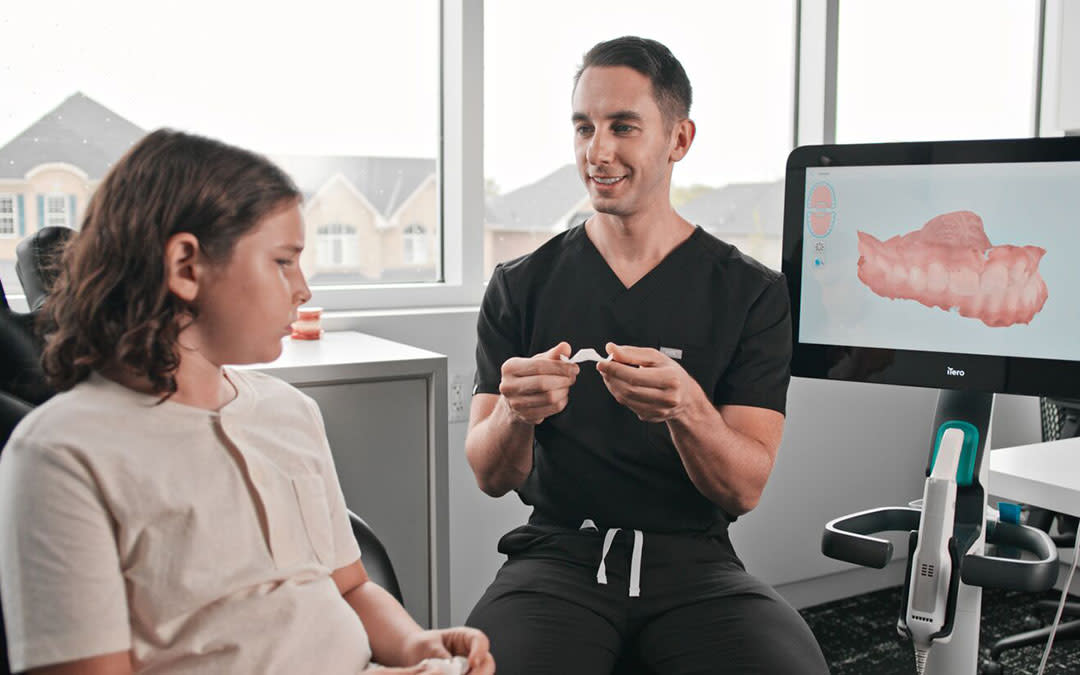
Your provider uses an advanced iTero™ scanner to capture a highly accurate 3D model of your child’s teeth. No messy, gooey molds required.
Custom Printing:
Using that digital model, a series of sleek expanders are custom-fit and 3D-printed.9
Step-by-Step Wear:
Your child wears each expander in the sequence to gently move the jaw into position.
Easy Progress Checks:
Regular visits with your orthodontist ensure everything is moving along perfectly.
Additionally, expanding the upper jaw with Invisalign Palatal Expander may expand the nasal cavity and nasal airway.10 The precision of this technology allows for predictable, carefully mapped movements that take the guesswork out of early orthodontic care.
Is the Invisalign Palatal Expander System Comfortable for Kids?
Orthodontic visits can make children anxious, so comfort is a top priority for parents. Fortunately, the Invisalign Palatal Expander System is widely reported to be a much more comfortable experience than older metal versions.3
Because each set is custom-fit and 3D-printed, there are no sharp metal edges to scratch cheeks and no high-pressure manual screw turning. This drastically reduces daily pain and anxiety for both the child and the parents.9
In clinical testing, an impressive 88% of parents stated that their child experienced little to no discomfort while using these expanders.11 Keeping the process pain-free ensures that children stay happy and cooperative throughout their early dental care journey.
How it Compares to Traditional Metal Expanders?
Here’s how the Invisalign Palatal Expander System compares to traditional expanders:
Key Benefits at a Glance:
Better Quality of Life:
90% of surveyed orthodontists agree that young patients using this system enjoy a better daily experience than those with fixed metal appliances.14
Simple Dental Hygiene:
Because the appliance pops right out, kids can brush and floss thoroughly without struggling around metal brackets.4
Stress-Free Changes:
You get the expansion your child needs without the friction of wires or the pain of daily manual adjustments.3
Will My Child Have Trouble Using the Invisalign Palatal Expander System?
Parents often worry that a young child might struggle to wear or care for a removable appliance. However, real-world data shows that these expanders are incredibly simple for kids and parents to manage.
In clinical studies, 89% of parents reported little to no difficulty using the system.15 The expanders are designed to be so easy to insert and remove that children can quickly learn to handle them completely on their own.16 This easy learning curve avoids daily arguments, fits right into your family's routine, and gives kids a proud sense of responsibility over their new smile.
Real Success Rates and Patient Experiences
The data from families and dental professionals shows high satisfaction across the board:
High Compliance:
93% of young patients successfully follow their guidelines and wear the device exactly as directed throughout treatment.17
Social Confidence:
82% of parents reported that their child never felt shy, self-conscious, or embarrassed while wearing their expanders.13
Happy Parents:
The vast majority of families report being entirely satisfied with the final results of the treatment.18
Doctor Approved:
100% of surveyed orthodontists confirm that Phase 1 patients have an overwhelmingly positive experience with this system.19
Safety and Allergy Details
Your child's health is your main priority, and it is a focus for this system too. It stands out as the only FDA-cleared removable option for palatal expansion. For children who struggle with sensitivities or allergies, the materials used to manufacture the expanders are entirely free from latex, Bisphenol A (BPA), and common food allergens like nuts or shellfish.20 You can move forward with treatment knowing the materials are thoroughly tested, biocompatible, and safe.
Frequently Asked Questions
Can adults use this palate expander?
Palate expanders are designed for children because their jawbones are still growing and soft enough to widen gently.7 The Invisalign Palatal Expander System is clinically proven for kids ages seven to ten.2 Adults with a narrow jaw typically require surgical solutions alongside their orthodontic treatment.
How long does the process take for kids?
Every child's mouth is unique, but treatment generally lasts anywhere from a few months to a single year. Your orthodontist will map out an exact timeline so you can see your child's expected progress before you start.
Is the Invisalign Palatal Expander System noticeable?
No, it is very discreet. Because the system uses less visible material, it is far less obvious than metal brackets and bands. This is why 82% of parents noted their children never felt embarrassed or self-conscious during their daily interactions.13
How do you clean an Invisalign palatal expander?
Cleaning is incredibly quick because the device is completely removable:4
Take the expander out of the mouth.
Rinse it with clean, lukewarm water.
Gently brush the surface with a soft-bristled toothbrush.
Give it one final rinse before putting it back in.
Does a palate expander hurt?
With this advanced system, physical discomfort is minimal. In clinical reviews, 88% of parents noted their child experienced little to no pain during treatment.11 It provides a much softer, more comfortable experience3 than traditional metal expanders.
What happens after the jaw is successfully widened?
Once the expansion phase wraps up, your provider will guide you on next steps. Your child might shift to Vivera™ retainers to lock in the new jaw shape, or they may move directly into standard Invisalign clear aligners to finish straightening their smile.
Can my child eat normally with it?
Yes. Unlike traditional fixed metal expanders that trap food, your child can remove these less visible expanders before every meal.4 They can continue eating all of their favorite foods without any dietary restrictions.
Ready to Take the Next Step?
Early orthodontic intervention can pave the way for a healthier, more confident future for your child. If you are ready to explore the benefits of the Invisalign Palatal Expander System, schedule a visit with a trained provider today. Using iTero scanner, they can map out your child's smile in real time and build a customized, comfortable path to a great smile.
Results may vary. Always consult with your orthodontist or dentist to determine if Invisalign treatment is the right choice for your child.